
BASQUEIRO
PROJECT OVERVIEW
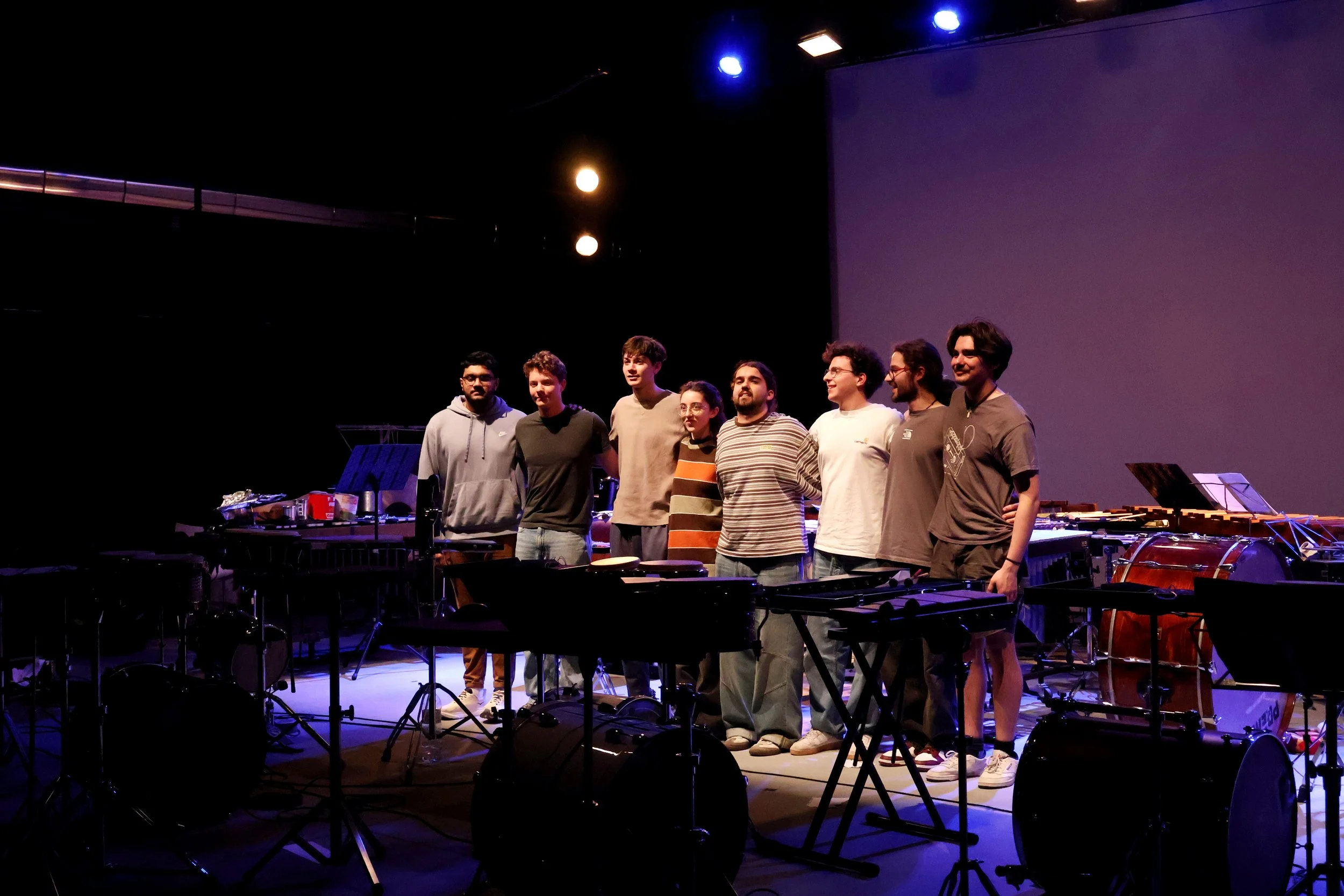
In the summer of 2025, percussionists Ji Hye Jung and Lee Vinson of Nashville, Tennessee found themselves performing and teaching halfway across the world in a small, sleepy town in central Portugal. As they bonded with the local faculty and students, Jung and Vinson were reminded of their own undergraduate students back home at Vanderbilt University, and dreamed of what it would be like for the two groups to meet. In the spring of 2026, that dream became a reality, and the 13 dynamic students of the Vanderbilt Percussion Group traveled to Castelo Branco, Portugal for the ultimate cross-cultural collaboration. The short documentary BASQUEIRO, filmed over the course of the trip and the preceding preparation in Nashville, follows the group through intense rehearsals, travel mishaps, a big performance, and all of the shenanigans in between. As the American students bond with each other and their Portuguese counterparts, they ultimately learn that the true joy of music is the friendship forged along with way. As the title suggests (Basqueiro is northern Portuguese slang for “ruckus” or “loud noise”), you’re in for a wild ride of percussive chaos and fond memories.
ARTIST STATEMENT
As a senior member of the Vanderbilt Percussion Group, this film was a deeply personal journey that allowed me to reflect on my four years with the ensemble as well as my development as a filmmaker. I came into college as a music education major, inspired by a love of percussion and community and quickly finding a second family in my fellow percussionists. In addition to the hours upon hours of weekly rehearsals, our studio bonds over meals, travel, and humor, forming tight friendships in an already tight community of musicians at Vanderbilt. Our professors, similarly, are much more than teachers; they are mentors, life coaches, and surrogate parents, inviting us over for meals and bringing their daughter, Eugenia, to school to hang out with us. Consequently, my film as a whole functions as a sort of love letter to the subjects as well as to the percussive art form itself. First and foremost, I wanted to capture the deep friendships and warm camaraderie that have shaped my college journey so meaningfully. Choosing an observational style of documentary allowed these themes to shine through, as the person holding the camera was always a member of the ensemble who could integrate seamlessly into and interact with the onscreen events.
This style also represented a new horizon for me as a filmmaker. In my work as a social media manager, many of my previous film projects have been highly expository. I rely heavily on planned interview questions, polished b-roll editing, and royalty free background music to craft moods and sequences. My editing style is known for quick, efficient cuts that prioritize social media attention spans and engaging hooks to grab attention immediately. With the chance to create a longer documentary, however, I was able to explore what it truly meant to simply keep the camera rolling, crafting longer sequences and allowing the audience to become immersed in the events. Reviewing the hours upon hours of footage that I captured was deeply rewarding in seeing how much of the original memories I was able to preserve. This, however, became a hindrance when editing for viewers who were outside of the ensemble, but provided the fulfilling challenge of test audience feedback to truly determine which scenes resonated with a broader audience.
As a whole, I deeply appreciated the opportunity to merge my two areas of artistic passion. By using the medium of film to reflect on the medium of music, I found a surprising number of ways that the two mirrored each other in beautiful ways. For instance, my musical background allowed me to think of the structure of the film as if it were a piece of music, crescendoing and joining together in harmony along with the characters. Likewise, finding narrative and visual links between different sequences throughout the broader film allowed me to forge new reflective connections and trace the development of friendships and bonds throughout the percussion journey itself. I’m tremendously grateful for the opportunity to share this journey with the world through Basqueiro.